Apr 24, 2007

When To Expect News From Commissioner Astrue

Clearly, Commissioner Astrue is working on some plan to address Social Security's hearing backlog situation. When can we expect this? Here are the clues I have heard.

Astrue's confirmation hearing was on January 24, 2007. At the time, he was asked how soon he would be able to come back for another hearing to talk about his plans for Social Security's backlogs. He said three months. I do not think it was ever specified whether this was three months from that date or three months after the date he assumed office -- which was February 12.

On February 14 Astrue appeared before the Social Security Subcommittee of the House Ways and Means Committee. They clearly wanted to hear from him again soon, although no time frame was mentioned.

Representatives of the National Council of Social Security Management Associations (NCSSMA) met with Astrue on March 1. At the time, he told them that Congress expected him to report back to them with ideas by April 15.

Nancy Shor, the executive director of the National Organization of Social Security Claimants Representatives (NOSSCR) said at the NOSSCR Conference last week that she had met with the Commissioner the week before and that he had talked about having some plan within a week -- which would have been last week, if you are following the timeline in this sentence..

Lisa DeSoto, the head of Social Security's Office of Disability Adjudication and Review (ODAR) mentioned at the NOSSCR conference that she expected Commissioner Astrue to have a plan within a couple of weeks, which would mean next week.

Thus far, neither the Senate Finance Committee nor the House Social Security Subcommittee has scheduled another appearance for Astrue. However, it appears that we should expect each to be scheduling a hearing soon, almost certainly before the middle of May. That is when Astrue is likely to unveil his plan. However, if you want to see a preview, take a look below at my summary of the highlights from the NOSSCR conference. I will give more detailed summaries from that conference when I have time.

Apr 23, 2007

2007 Trustees Report Press Release

News Release

Social Security Board of Trustees Issues Annual Report

Long-Range Financing Challenges Continue

The Social Security Board of Trustees today released its annual report on the financial health of the Social Security Trust Funds. The 2007 Trustees Report shows slight improvement in the projected financial status of the Social Security program from last year.

In the 2007 Annual Report to Congress, the Trustees announced:

  • The projected point at which tax revenues will fall below program costs comes in 2017 -- the same as the estimate in last year’s report.

  • The projected point at which the Trust Funds will be exhausted comes in 2041 -- one year later than the projection in last year’s report.

  • The projected actuarial deficit over the 75-year long-range period is 1.95 percent of taxable payroll -- .06 percentage point smaller than in last year’s report.

  • Over the 75-year period, the Trust Funds would require additional revenue equivalent to $4.7 trillion in today’s dollars to pay all scheduled benefits. This unfunded obligation is about $100 billion higher than the amount estimated last year.

“Social Security provides valuable economic protection to workers and their families. We owe it to the American public to continue to offer the best possible support for older Americans, people with disabilities and their families in the coming decades,” said Michael J. Astrue, Commissioner of Social Security. “The Trustees Report is an important tool for those in the legislative and executive branches who will have to make the very difficult decisions about how best to ensure Social Security remains viable for the long term.”

Other highlights of the Trustees Report include:

  • Income including interest to the combined Old-Age and Survivors, and Disability Insurance (OASDI) Trust Funds amounted to $745 billion ($626 billion in net contributions, $17 billion from taxation of benefits and $102 billion in interest) in 2006.

  • Total expenditures from the combined OASDI Trust Funds amounted to $555 billion in 2006.

  • The assets of the combined OASDI Trust Funds increased by about $190 billion in 2006 to a total of $2 trillion.

  • During 2006, an estimated 162 million people had earnings covered by Social Security and paid payroll taxes.

  • Social Security paid benefits of $546 billion in calendar year 2006. There were 49 million beneficiaries at the end of the calendar year.

  • The cost of $5.3 billion to administer the program in 2006 was a very low 1.0 percent of total expenditures.

  • The combined Trust Fund assets earned interest at an effective annual rate of 5.3 percent.

The Board of Trustees is comprised of six members. Four serve by virtue of their positions with the federal government: Henry M. Paulson, Jr., Secretary of the Treasury and Managing Trustee; Michael J. Astrue, Commissioner of Social Security; Michael O. Leavitt, Secretary of Health and Human Services; and Elaine L. Chao, Secretary of Labor. The two public trustees are John L. Palmer and Thomas R. Saving.

The 2007 Trustees Report will be posted at www.socialsecurity.gov/OACT/TR/TR07/ by Monday afternoon. [It is now posted]

Hearing Backlog Poll

Report On SSI Disabled Recipients Who Work

Social Security's Office of Policy has issued a report on SSI disabled recipients who work. Some highlights:

Geographic Distribution

Among the states, the percentage of disabled workers varied from a low of 2.9 percent in Mississippi to a high of 18.8 percent in North Dakota. In general, the percentage of disabled workers was higher in the northern states than in the southern states.

Demographic Characteristics

The majority of these disabled workers were male (53.5 percent). Almost half (49.1 percent) had unearned income; 43.4 percent were receiving Social Security benefits. Comparable figures for all disabled recipients in December 2006 were 45.8 percent male, 38.2 percent with unearned income, and 30.5 percent receiving Social Security benefits.

Diagnosis

Disabled workers are more likely to have certain impairments than other disabled recipients. Almost two-thirds (66.4 percent) of the workers had a mental disorder, including 40.5 percent who were diagnosed with mental retardation. By comparison, 58.1 percent of all disabled recipients were diagnosed with a mental disorder, including 21.6 percent with mental retardation.

Section 1619

The greatest use of work incentive provisions was by participants under section 1619—roughly 30.5 percent of disabled workers. This included 5.0 percent under section 1619(a) and 25.6 percent under section 1619(b).

Other Work Incentives

Use of other work incentive provisions continued to have a smaller, but measurable, impact. In December 2006, about 2.7 percent of the SSI disabled workers had some of their income excluded under one of these provisions—plans to achieve self-support (PASS), 0.5 percent; impairment-related work expenses, 1.6 percent; or blind work expenses, 0.7 percent.

Plans to achieve self-support permit an SSI recipient to set aside income and resources to help obtain the training or education necessary for certain specified occupational goals. In December 2006, 409 PASS participants had earnings, which averaged $792 per month. However, exclusions under a PASS are not limited to earnings. Of the 1,583 disabled recipients with a PASS, 69.4 percent did not have any earnings reported for December 2006. For this group, the PASS excluded unearned income such as Social Security benefits. Out of all PASS participants, 435 had a PASS that excluded only resources.

SSA Press Release

Social Security has issued the following press release about a study earlier linked here:

The Social Security Administration ranks as one of the top ten “Best Places to Work in the Federal Government,” according to The Partnership for Public Service and American University’s Institute for the Study of Public Policy Implementation. The ranking not only identified Social Security as one of the “Best Places to Work,” but also the most improved agency this year.

“I’m very pleased that this score reflects what many of us already know: Social Security is a great place to work,” said Michael J. Astrue, Commissioner of Social Security. “It is my sincere hope that anyone thinking about a career in public service will seriously consider Social Security.”

The “Best Places to Work” rankings are based on the results of the Office of Personnel Management’s Federal Human Capital Survey, a government-wide assessment of federal employees’ job satisfaction and perceptions of their agency’s human capital efforts. The survey identified effective leadership and skills-to-mission match as the biggest drivers of overall employee satisfaction and engagement.

Social Security attributes its success to:

  • linking human capital management programs to the Agency’s missions,
  • building a diverse and productive workforce,
  • using high standards for recruitment, and
  • maintaining a wide array of development programs and other employee-friendly programs.

“Social Security has a workforce of dedicated, talented, and well-trained employees,” said Commissioner Astrue. “We need to continue to hire and retain the best and the brightest for the future.”

To learn more about careers with the Social Security Administration, please go to: www.socialsecurity.gov/careers.

To learn more about the report, please go to: www.bestplacestowork.org.

Results Of Last Week's Unscientific Poll

How much better or worse do you expect Social Security's ALJ hearing backlogs to be a year from now?

Considerably Better (13) 9%
Somewhat Better (23) 16%
Unchanged (28) 20%
Somewhat Worse (41) 29%
Considerably Worse (38) 27%

Total Votes: 143

Apr 22, 2007

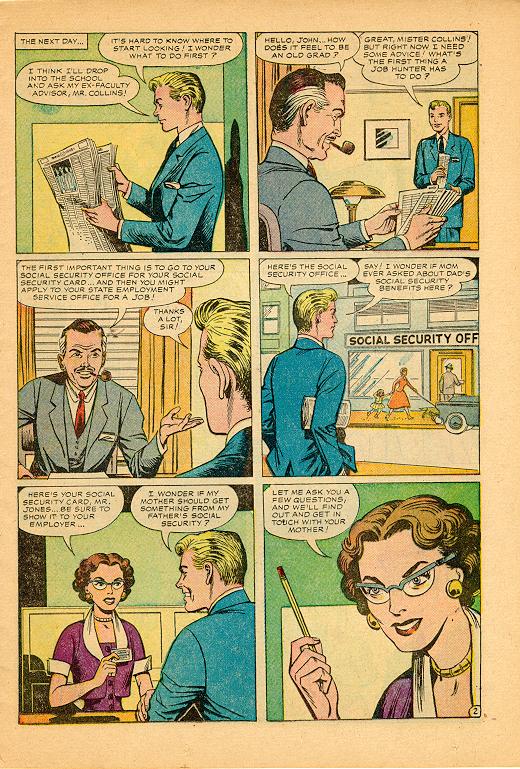
From A 1956 Social Security Administration Publication

Briefing On Social Security Trustees' Report

The National Academy of Social Insurance has scheduled a briefing session for Congressional staffers on the upcoming Social Security Trustees' report on April 25. Hint: Andrew Biggs will not be speaking.

Apr 21, 2007

New Standards For ALJs

The Office of Personnel Management has posted new standards for Administrative Law Judges (ALJs), reproduced below. I have no idea whether this moves us closer to a new ALJ register.

Qualification Standard For Administrative Law Judge Positions

I. BACKGROUND

The Administrative Law Judge (ALJ) function was created by the Administrative Procedure Act (APA) in 1946 to ensure fairness in administrative proceedings before Federal Government agencies.

ALJs serve as independent impartial triers of fact in formal proceedings requiring a decision on the record after the opportunity for a hearing. In general, ALJs prepare for and preside at formal proceedings required by statute to be held under or in accordance with provisions of the APA, codified, in relevant part, in sections 553 through 559 of title 5, United States Code (U.S.C.). ALJs rule on preliminary motions, conduct pre-hearing conferences, issue subpoenas, conduct hearings (which may include written and/or oral testimony and cross-examination), review briefs, and prepare and issue decisions, along with written findings of fact and conclusions of law.

The Federal Government employs ALJs in a number of agencies throughout the United States. Cases may involve Federal laws and regulations in such areas as admiralty, advertising, antitrust, banking, communications, energy, environmental protection, food and drugs, health and safety, housing, immigration, interstate commerce, international trade, labor management relations, securities and commodities markets, social security disability and other benefits claims, and transportation.

II. QUALIFICATION REQUIREMENTS

An applicant must meet both the licensure and experience requirements and pass the OPM administrative law judge competitive examination to qualify for an ALJ position.

A. Licensure

Applicants must be licensed and authorized to practice law under the laws of a State, the District of Columbia, the Commonwealth of Puerto Rico, or any territorial court established under the United States Constitution throughout the selection process, including any period on the standing register of eligibles. Judicial status is acceptable in lieu of "active" status in States that prohibit sitting judges from maintaining "active" status to practice law. Being in "good standing" is acceptable in lieu of "active" status in States where the licensing authority considers "good standing" as having a current license to practice law.

B. Experience

Qualifying Experience

Applicants must have a full seven (7) years of experience as a licensed attorney preparing for, participating in, and/or reviewing formal hearings or trials involving litigation and/or administrative law at the Federal, State or local level.

Cases must have been conducted on the record under procedures at least as formal as those prescribed by sections 553 through 559 of title 5, U.S.C.

Qualifying litigation experience involves cases in which a complaint was filed with a court, or a charging document (e.g., indictment or information) was issued by a court, a grand jury, or appropriate military authority, and includes:

  • participating in settlement or plea negotiations in advance of trial;
  • preparing for trial and/or trial of cases;
  • preparing opinions;
  • hearing cases;
  • participating in or conducting arbitration, mediation, or other alternative dispute resolution approved
    by the court; or
  • participating in appeals related to the types of cases above.

Qualifying administrative law experience involves cases in which a formal procedure was initiated by a governmental administrative body and includes:

  • participating in settlement negotiations in advance of hearing cases;
  • preparing for hearing and/or trial of cases;
  • preparing opinions;
  • hearing cases;
  • participating in or conducting arbitration, mediation, or other alternative dispute resolution approved by the
    administrative body; or
  • participating in appeals related to the types of cases above.

Non-qualifying Experience

Experience involving cases with no formal hearing procedure and uncontested cases involving misdemeanors, probate, domestic relations, or tort matters is not qualifying.

C. Examination

Applicants are required to pass an examination, the purpose of which is to evaluate the competencies/knowledge, skills, and abilities (KSAs) essential to performing the work of an Administrative Law Judge.

III. CONDITION OF EMPLOYMENT

ALJs must be held to a high standard of conduct to maintain the integrity and independence of the administrative judiciary. As a condition of employment, all ALJs must meet the licensure requirement stated in Part II Qualification Requirements. Incumbent ALJs must continue to meet this condition throughout the duration of their employment. This requirement also applies to former ALJs who are reinstated or reemployed as Senior ALJs. Judicial status is acceptable in lieu of "active" status in States that prohibit sitting judges from maintaining "active" status to practice law. Being in "good standing" is acceptable in lieu of "active" status in States where the licensing authority considers "good standing"

Apr 20, 2007

Commissioner At Press Briefing On Monday

From a Treasury Department press release:

Treasury Secretary Paulson to Host Press Briefing on the Social Security and Medicare Trustees Reports

Treasury Secretary and Managing Trustee Henry M. Paulson, Jr. will be joined by members of the Social Security and Medicare Trustees Board for a press briefing to discuss the release of the annual trustees reports on Monday.

Who
Secretary of Treasury and Managing Trustee Henry M. Paulson, Jr.
Secretary of Labor and Trustee Elaine L. Chao
Secretary of Health and Human Services and Trustee Michael Leavitt
Commissioner of Social Security and Trustee Michael J. Astrue
Public Trustee John Palmer
Public Trustee Thomas Saving

What
Press Conference to discuss Social Security and Medicare Trustees Reports

When
Monday, April 23, 2007, 3:15 p.m. EDT

Where
Treasury Department
Media Room (Room 4121)
1500 Pennsylvania Ave., NW
Washington, DC